
The Complete Guide to Introverts, Extroverts, and Ambiverts
- 28 October 2025
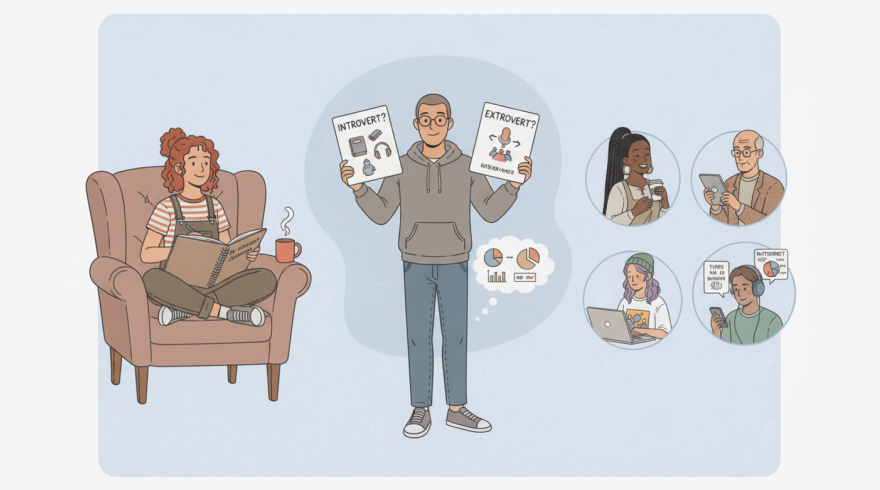
Understanding the Personality Energy Spectrum
People process the world through different energy patterns, social rhythms, and recovery cycles, and those differences shape how we work, love, and communicate. Rather than a rigid binary, modern personality science describes a continuum with nuanced gradients and situational shifts. Your preference for stimulation, solitude, or variety can change across life stages, environments, and goals. Appreciating this spectrum helps you reduce friction, improve relationships, and choose strategies that match your natural cadence.
Curiosity about temperament often begins with noticing how we recharge and how we focus in groups. Within many communities, the phrase introvert extrovert ambivert captures the breadth of these orientations while acknowledging real overlap and flexibility. By naming the spectrum, we can clarify needs without stereotyping people into narrow boxes or one-size-fits-all labels.
Labels become useful only when they guide practical decisions about boundaries, environments, and expectations. In discussions comparing tendencies, the shorthand introvert vs extrovert vs ambivert helps people map differences in social energy, attention habits, and preferred communication channels. Still, the most fruitful approach is to use these insights to co-create norms that allow everyone to contribute sustainably.
Core Traits and Unique Benefits
Each orientation offers distinctive advantages for teams, creativity, and personal well-being. Quiet-focused minds often bring deep concentration and refined listening, while highly social energizers spark momentum, connection, and rapid feedback cycles. Those who flex between modes can read rooms and shift gears with remarkable agility. Knowing the signature benefits enables leaders and collaborators to assemble balanced dynamics and avoid groupthink.
Balanced teams thrive when they leverage complementary strengths rather than forcing homogeneity. In many collaboration circles, the triad expressed as extrovert introvert ambivert is a reminder to design processes that give reflective space, social oxygen, and adaptive flow. When meetings, workflows, and rituals respect these differences, performance and morale rise together.
| Type | Core Needs | Signature Strengths |
|---|---|---|
| Introvert | Calm environments, solo focus time, meaningful depth | Deep work, attentive listening, analytical insight |
| Extrovert | Social interaction, fast feedback, dynamic variety | Networking, verbal brainstorming, visible momentum |
| Ambivert | Situational choice, balance of solitude and connection | Adaptability, empathy across styles, contextual leadership |
Benefits compound when people can shift between focus and connection strategically. For those comparing patterns, the arrangement sometimes phrased as introvert ambivert extrovert underscores that skills are not mutually exclusive and that development often involves expanding one’s range. With intentional design, each person’s strengths become a resource for the whole group.
- Introverts contribute depth by synthesizing complex inputs before speaking.
- Extroverts energize momentum by mobilizing people and ideas quickly.
- Ambiverts bridge styles by adjusting tempo, tone, and participation.
Growth Strategies and Communication Skills
Personal growth in this domain is less about changing who you are and more about optimizing when and how you engage. The key is to honor your recharge cycle, craft environments that support your focus, and learn lingua francas that connect you with different styles. Calibration beats overcorrection, and sustainable habits beat short, drastic pushes.
When self-inquiry starts to surface, many people reflect on identity using prompts that sound like am i introvert extrovert or ambivert while journaling about energy peaks and dips. A more grounded method pairs self-reflection with low-risk experiments that test communication tweaks, meeting formats, and recovery windows.
Teamwork improves when people translate their needs into actionable requests and mutual agreements. In comparative dialogues, the sequence extrovert vs introvert vs ambivert can open a conversation about cadence, turn-taking, and meeting design that lifts participation for all. The result is a shared operating system where everyone’s attention and energy receive equal respect.
- Set “focus blocks” and “collab blocks” to align energy with task type.
- Use agenda buffers for quiet thinking before discussion begins.
- Rotate facilitation styles so each orientation has its moment to shine.
- Translate preferences into clear signals, such as status boards or handoffs.
Careers, Leadership, and Collaboration
Career satisfaction often accelerates when you match your social bandwidth with job design. Roles heavy on stakeholder management or live negotiation call for real-time presence, while research-heavy roles reward deep concentration and contemplative analysis. Hybrid roles can be crafted to balance outreach with protected focus windows, creating sustainable performance without burnout.
Professionals exploring development tools sometimes benefit from structured assessments, including resources akin to an introvert extrovert ambivert test that highlights energy preferences and work-pattern tendencies. The best instruments translate insights into practical micro-habits: calendar hygiene, meeting rules, and recovery practices.
Hiring managers can make roles clearer by naming collaboration density and communication frequency in job descriptions. For people comparing diagnostic options, a phrase like introvert ambivert or extrovert test often appears alongside discussions of validity, reliability, and cultural nuance. Regardless of the tool, pair data with coaching and on-the-job experiments to confirm fit.
- High-interaction paths: sales development, event production, community ops.
- Depth-centered paths: data science, editorial analysis, lab research.
- Hybrid paths: product management, UX research, client strategy.
- Leadership paths: define team energy norms and protect diverse working styles.
Testing, Quizzes, and Self-Assessment Methods
Assessment should illuminate, not confine. Good tools provide language for needs, reveal blind spots, and suggest experiments that refine your routines. Combine instrument results with reflection logs, biometric or calendar data, and feedback from peers who see you in different contexts. Over time, patterns become clearer and decisions become easier.
Many readers enjoy playful tools for quick insights, including formats similar to an introvert extrovert ambivert quiz that translates preferences into everyday scenarios. Treat these as conversation starters, not verdicts, and follow them with observations about your best and worst energy days.
For deeper exploration, some people try scenario-based prompts that resemble an am i introvert extrovert or ambivert quiz and then validate results during real projects. The most reliable indicator remains lived experience: notice which tasks drain you, which interactions fuel you, and how long recovery actually takes.
- Track energy levels for two weeks across tasks, times, and settings.
- Pair results with sleep, nutrition, and movement patterns for context.
- Run tiny experiments: shorter meetings, async updates, or quiet commutes.
- Share a one-page “user manual” with your team to align expectations.
FAQ: Common Questions About Personality Energy
How do I know if I need more solitude or more stimulation?
Watch your recovery curve after social time and your mental sharpness during uninterrupted work. If your focus improves with quiet and you feel restored after solo time, skew your schedule toward low-stimulation blocks on heavy thinking days.
Can my orientation change over time?
Preferences can shift with role demands, life stage, and health habits, but core tendencies usually remain recognizable. In community spaces, you might encounter playful prompts like are you an extrovert introvert or ambivert quiz that help you notice trends across seasons and projects.
What’s the best way to collaborate across styles?
Make the invisible visible by naming energy needs, meeting formats, and communication cadences. Rotate facilitation, share agendas early, and design hybrid rituals that allow both deep work and rapid feedback to coexist.
Which assessment should I try first?
Start with a lightweight tool and treat results as hypotheses, then refine through observation. After an initial pass, some people sample a reflective prompt such as an am i an introvert ambivert or extrovert quiz and compare the output with week-long energy journaling.
How can leaders support all three orientations?
Create explicit norms for focus time, meeting length, and async communication, and guard these agreements as seriously as deadlines. Measure team health by both output and recovery, and celebrate diverse contribution styles as strategic assets.